

From the solitude and rugged beauty of the Upper Peninsula to the tranquil countrysides of the southern Lower Peninsula, Thomas Funke will always treasure the time he’s spent traversing Michigan’s section of the North Country Trail (NCT).
Few people know it better than Funke, a Muskegon native and author of “50 Hikes on Michigan’s and Wisconsin’s North Country Trail” and “50 Hikes in Michigan’s Upper Peninsula.”
Michigan boasts the most miles (1,180) of the eight states through which the 4,800-mile NCT passes. The trail, which runs between Vermont and North Dakota, enters the state near Morenci, coming up from Ohio, and exits into Wisconsin just west of Ironwood. The North County Trail Association, which oversees the entire trail, is headquartered in Lowell.
Funke has hiked all of the Upper Peninsula’s 550 miles and explored many Lower Peninsula sections while serving as director of conservation for the Binder Park Zoo in Battle Creek and conservation director for the Michigan Audubon Society. In all, he says he’s hiked more than 2,000 NCT miles.
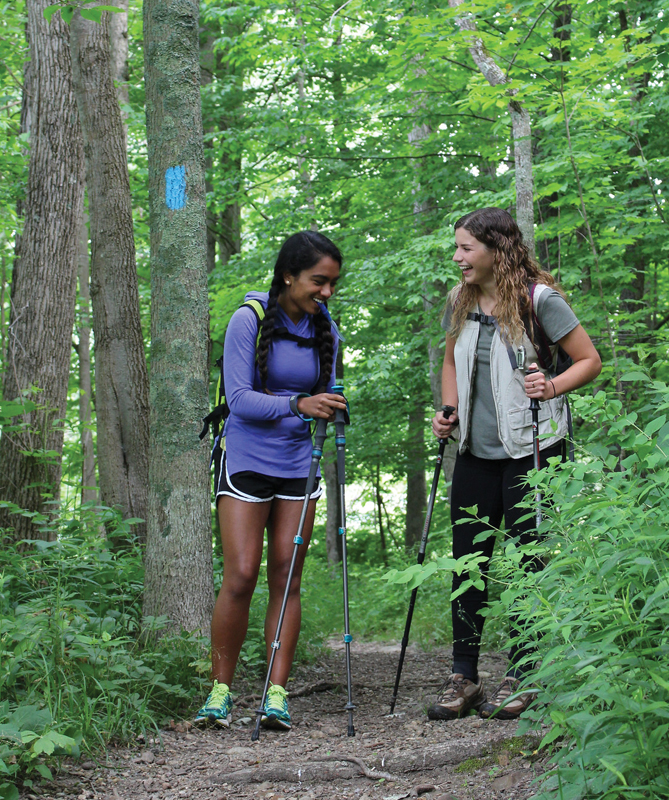
“What I love about the North Country Trail in Michigan is how it flows through a variety of environments from near downtowns like Battle Creek to remote areas like McCormick Wilderness (northwest of Marquette),” Funke says. “Users can experience those very different areas and everything in between. Millions of Michigan residents live within an hour of the trail.”
Guidebook author Jim DuFresne — whose titles include “50 Hikes in Michigan” and “Backpacking in Michigan” — and NCT Michigan Trail Coordinator Kenny Wawsczyk can also attest to the trail’s variety as it traverses the state.
“Michigan has the best, most developed sections of the NCT and the largest array of terrain,” says DuFresne, who is co-founder of the Michigan Trail Maps website (michigantrailmaps.com). “There’s a marvelous section that skirts Traverse City through the Pere Marquette State Forest to Kalkaska, then north through Petoskey, around Harbor Springs, and into Wilderness State Park near Mackinaw City. The U.P. portion is wild and interesting, especially the remote section running east from Grand Marais to the Crisp Point Lighthouse. Much of it is right along Lake Superior.”
Wawsczyk assumed his current role in 2015 after seven years as a Manistee National Forest trails crew leader. “What’s great about the NCT in Michigan is how it offers a great variety of landscapes but also has sections for people of all ages and ability levels — meaning those who think of themselves as walkers and not necessarily hikers,” he adds. “A good place for anyone to start is heading north from Croton Dam (in Newaygo).”
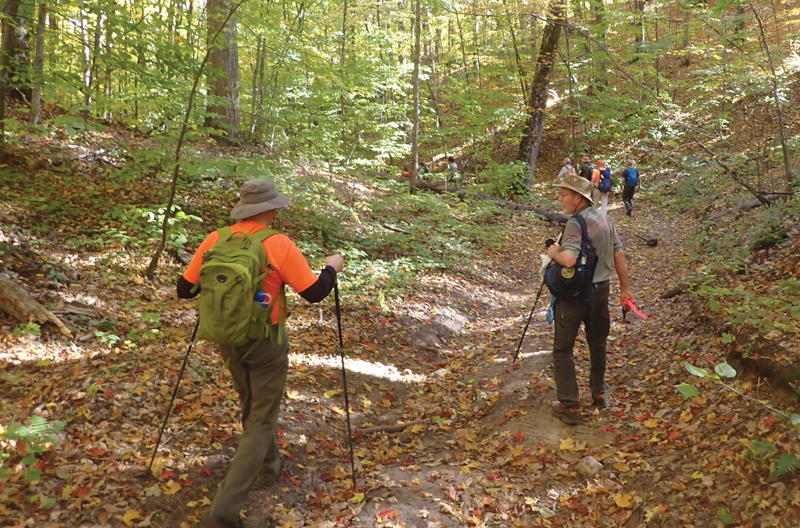
The NCT in Michigan is maintained by 12 chapters of volunteers. Each chapter is responsible for a section. Chapters also organize group hikes, which are always open to non-members.
“Without the dedicated volunteers within our chapters, there is no trail,” Wawsczyk says. “They keep it clear and improve their sections of trail in any way they can, even building new sections so there’s less road-walking involved. There are (also) volunteer opportunities other than trail labor, like chapter secretary or social media manager.”
Wawsczyk marvels at the way northern Lower Peninsula chapters responded to last year’s devastating ice storm, which stripped branches and limbs from thousands of trees. “They cleared about 100 miles of trail in three months,” he reports. “What an amazing example of how efficient and dedicated they are.”
DuFresne has assisted the NCT’s Grand Traverse Chapter with mapping of the Fife Lake Loop Trail, part of the 107 miles of trails the chapter maintains between Mesick and Mancelona.
“What these chapters do is remarkable, from cleaning up debris and clearing downed trees to building bridges and constructing boardwalks across swamps,” he says. “They paint blue blazes on trees and put up trail signs to provide direction.”
The NCTA also partners with numerous agencies — including several branches of the Michigan Department of National Resources, the National Forest Service, local parks and recreation departments, timber companies, and private landowners — to maintain and improve the trail.
In 2023, the National Park System officially designated the NCT as a unit of the park system, qualifying it for additional funding opportunities and resources, and affording it the same legal status as other NPS properties.
The NCT passes by a cave and covered bridge, among other landmarks, in southern Michigan before winding through state and national forest lands on the western side of the Lower Peninsula to the Mackinac Bridge.
In the Upper Peninsula, the trail heads northwest from the bridge, connecting several iconic areas such as Tahquamenon Falls State Park, Pictured Rocks National Lakeshore, and the Porcupine Mountains. “My favorite NCT day hike is (5 miles) between the Upper and Lower Tahquamenon Falls,” Funke says. “I’ve hiked it too many times to count and it’s a unique experience every time.”
Below is a list of other NCT sections many hikers recommend exploring.
LOWER PENINSULA
- A 7-mile section that passes through Lost Nation State Game Area, near Pittsford, features moraines left by retreating glaciers, wildlife along the St. Joseph River, ravines, and Silas Doty Cave.
- Another 7-mile stretch from Lowell to Fallasburg Park has a famous covered bridge and offers rolling terrain through the Lowell State Game Area, as well as views of the Flat River.
- Farther north, a section of the NCT combines with the Manistee River Trail near Mesick to form a 21-mile loop, while another portion is part of the 18-mile Jordan Valley Pathway loop near Alba. There’s also a 3-mile loop beginning at Deadman’s Hill Overlook.
- A roughly 3-mile section near Kingsley passes through Valley of the Giants, a tract of old-growth forest featuring towering virgin pines and hemlocks, and a creek with sprawling beaver dams.
- A 4-mile, out-and-back section near Petoskey known as the Skyline Trail begins with a descent through a thick forest of tall pines and has views of the Bear River Valley and Little Traverse Bay.
- From the Lakeview Trailhead south of Wilderness State Park, a roughly 2-mile, out-and-back hike winds through a dune forest and past a peaceful creek and vernal pool. A spur trail leads to a stunning overlook of Lake Michigan’s Sturgeon Bay.
A DuFresne favorite: “The NCT section running along the Manistee River is scenic and rugged. The Skyline climbs above Petoskey to an observation platform for a nice view of Lake Michigan, especially after the leaves drop. The shorter loop at Deadman’s Hill is great for a quick fall color hike.”

UPPER PENINSULA
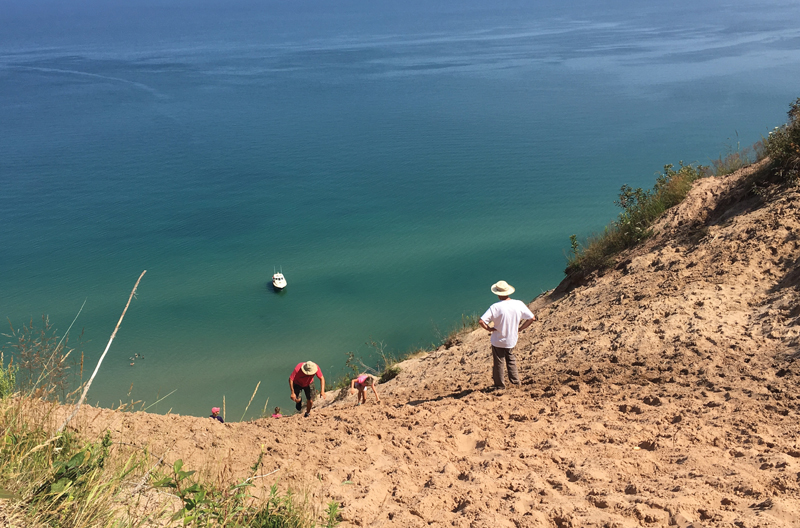
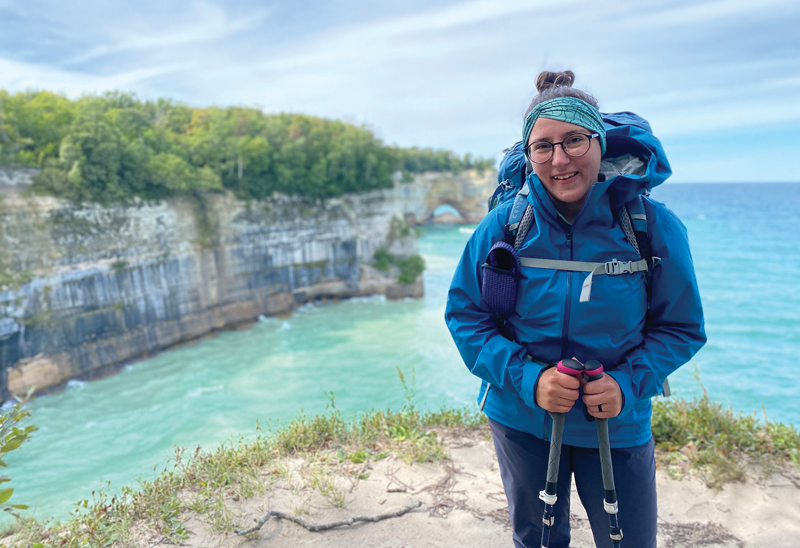
- The 42 miles along Pictured Rocks is considered the crown jewel of the NCT, taking hikers roughly 200 feet above Lake Superior at times. Experience the Grand Sable Dunes, the Miners Castle overlook, and the Chapel Loop trail, featuring two waterfalls, Chapel Rock, and breathtaking Chapel Beach.
- A 4.6-mile stretch from Wetmore Landing to Echo Lake Road just west of Marquette offers stunning stretches of Lake Superior beach, rock formations, towering red pines, cliffs overlooking the lake, and Little Presque Isle not far from shore.
- A remote, 7-mile section running along the southern portion of the McCormick Wilderness has rugged landscapes, craggy rock formations, and unique plant life such as rock tripe and lungwort lichen.
- The Trap Hills segment, near Bergland, is another must-do for those seeking solitude. Highlights include sweeping views, waterfalls, and rare wildlife such as the Eastern timberwolf and peregrine falcon.
- The NCT’s Porcupine Mountains Wilderness State Park section cuts through the park’s eastern section before swinging west past the Lake of the Clouds overlook to waterfalls on the Presque Isle River, which forms the park’s western boundary.
- Farther west, a 5-mile stretch along the Black River passes by five stunning waterfalls.
A Wawsczyk favorite: “Anywhere west of Marquette to the Porcupine Mountains is especially remote and wild. We spotted two bull moose working on a section near Craig Lake State Park. The Sturgeon Gorge area (near Baraga) is very scenic. Don’t miss the waterfalls, one after another, on the Black River.”